
Business expansion depends on a digital marketing strategy that starts by identifying your target audience, then combines SEO, Google Ads (PPC), social media, email, and content marketing. Each channel works at a different speed and cost, and measuring KPIs turns spending into repeatable, compounding growth.
Key Takeaways
- Strategy comes before tactics: define your target audience and one growth outcome before spending.
- No single channel wins alone; SEO, PPC, social, email, and content each play distinct roles.
- SEO builds slow, compounding traffic; Google Ads delivers high-intent traffic the same day.
- Email and content nurture and build authority at low ongoing cost over time.
- Track KPIs with analytics and A/B testing to make growth repeatable, not guesswork.
Imagine this: your business is at a crossroads. The competition is fierce, and the market is changing fast. How do you ensure you don’t just survive but thrive? To get ahead, you need to draw in new customers and boost sales with a powerful marketing approach. This is where a well-crafted digital marketing strategy can transform your business.
Business expansion requires a strong digital marketing strategy. This helps companies find potential customers and grow revenue streams. Knowing your target audience is key. Use social media marketing, SEO, email marketing, content marketing, and PPC ads to reach your target market. These tools help you find new customer segments and improve your market share. Specific strategies like influencer marketing, video marketing, mobile marketing, retargeting, and marketing automation are important for business expansion.
- A digital marketing strategy is your growth game plan — it starts with knowing exactly who your target audience is before you spend a dollar.
- No single channel wins alone. SEO, Google Ads, social, email, and content each play a different role at a different speed and cost.
- What gets measured gets improved. KPIs, analytics tools, and A/B testing turn guesswork into a repeatable growth engine.
- Specific tactics — influencer, video, mobile, retargeting, and automation — help you reach new customer segments efficiently.
- Proven frameworks like RACE, the Marketing Mix, and the Flywheel give your efforts structure so growth compounds instead of stalling.
Importance of a Marketing Strategy
A marketing strategy is like a game plan for your business. It helps you figure out how to reach your target audience and get them interested in your product offerings. Without one, marketing spend becomes scattered — a post here, an ad there — with no way to tell what actually drives revenue. A clear strategy ties every channel, message, and dollar back to a growth goal, so your efforts build on each other instead of pulling in different directions.
Before you launch a single campaign, write down the one business outcome you want it to move — more qualified leads, higher average order value, or repeat purchases. Every channel decision that follows should trace back to that outcome. Strategy first, tactics second.
Understanding the Target Audience
Understanding your target audience is like knowing who you want to be friends with. It helps your business figure out who is most likely to buy your products or services. Here’s why it’s important:
- Who They Are: Your target audience is made up of the people who are most interested in what you sell. They could be different ages, genders, or have specific interests. Knowing who they are helps you make products they will like.
- What They Need: When you understand your target audience, you can find out what they need and want. This way, you can make sure your products solve their problems or make their lives better.
- Where They Are: Your target audience could be in specific places, like certain cities or online communities. Knowing where they are helps you reach them better with your marketing.
- How They Think: Understanding what your target audience thinks and feels helps you create messages that connect with them. This makes your marketing more effective because people feel like you understand them.
- How They Shop: Knowing how your target audience likes to shop, whether online or in stores, helps you make it easy for them to buy your products.
Utilizing Different Digital Marketing Channels
Using different digital marketing channels is like having multiple ways to talk to people. Each channel helps you reach your target audience in different ways, making sure your message gets to as many people as possible. This is important for your business expansion.
Having multiple channels means you can connect with potential customers where they like to spend their time. Some people might prefer social media, while others like email or search engines. By using different digital marketing channels, you can make sure you are meeting your target audience where they are most comfortable.
Using a variety of channels also helps you share your product offerings and business model in different formats. This keeps your marketing fresh and interesting. It also increases the chances of your message being seen and remembered. Overall, utilizing different digital marketing channels is essential for reaching a wider audience and driving growth for your business.
Not every channel does the same job. Some build long-term visibility, others deliver traffic the same day you turn them on. The table below compares the five core channels covered in this guide so you can decide where to start based on what your business needs right now.
| Channel | Best For | Speed to Results | Cost Profile |
|---|---|---|---|
| SEO | Long-term organic traffic and trust; capturing high-intent searches | Slow (builds over months) | Higher upfront effort, compounding value over time |
| Google Ads (PPC) | Immediate high-intent traffic and quick tests | Fast (same day) | Pay per click; costs stop when spend stops |
| Social Media | Brand awareness, community, and engagement | Medium | Low to moderate; paid boosts optional |
| Email Marketing | Nurturing existing contacts and repeat sales | Fast for existing lists | Low cost, strong return on owned audiences |
| Content Marketing | Building authority and fueling SEO and social | Slow to medium | Moderate; assets keep working long after publishing |
Social Media Marketing
It helps businesses reach their target audience on platforms like Facebook, Instagram, and Twitter. By using social media marketing, businesses can show their product offerings to many people at once. When a business uses social media marketing, it can share pictures, videos, and posts about its products. This helps potential customers learn more about what the business offers. It also allows businesses to talk directly to their customers, answer questions, and get feedback. This helps build a strong relationship with the target audience.
Using social media marketing is important for business expansion. It helps businesses find new customer segments and increase their market share. By posting regularly and interacting with followers, businesses can keep their customers interested and engaged. This makes it more likely that customers will buy their products and tell their friends about them.
SEO (Search Engine Optimization)
SEO (Search Engine Optimization) is like making sure your book is easy to find in a huge library. It helps businesses make their websites show up higher in search engine results, like on Google. This way, when potential customers search for something related to your product offerings, they can find your business quickly.
When a business uses SEO, it picks important words, called keywords, that people might type into search engines. By using these keywords in their website content, businesses can attract more visitors. For example, if a business sells shoes, they might use keywords like “best running shoes” or “affordable sneakers.” This helps their site show up when people search for those terms. Google’s own Search Central documentation is a reliable starting point for understanding how search engines crawl and rank pages.
SEO is important for business expansion because it brings more traffic to a website. More visitors mean more chances to turn those visitors into customers. By improving their SEO, businesses can reach their target market and grow their revenue streams. This makes SEO a powerful tool for finding new customer segments and increasing market share. If you’re weighing the investment, our guide to how much SEO costs breaks down what to expect.
SEO is a long game. It rarely delivers results overnight, and chasing shortcuts — keyword stuffing, spammy links, or thin pages — can hurt your rankings more than help them. Pair SEO with a channel that produces traffic quickly, like Google Ads, so you’re growing today while your organic presence builds for tomorrow.
Email Marketing
It helps businesses reach their target audience by sending emails about their product offerings directly to potential customers. When a business uses email marketing, they can share news, special deals, and updates with their customers. This keeps the customers interested and informed. Businesses often collect email addresses from people who visit their website or buy their products. They then send these people regular emails to keep them engaged and remind them about the business.
Email marketing is important for business expansion because it helps businesses stay connected with their current customers and find new ones. By sending personalized emails, businesses can make their customers feel special and more likely to buy again. This helps increase revenue streams and grow the customer base.
Content Marketing
Content marketing is like telling a great story that makes people want to learn more about your business. It helps attract and keep your target audience by creating and sharing valuable content. This content can be blogs, videos, infographics, and more.
When a business uses content marketing, it provides information that is helpful and interesting to potential customers. This might include tips, how-to guides, or fun facts related to the business’s products or industry. For example, a company that sells gardening tools might write a blog post about the best plants for beginners. This kind of content helps customers see the business as a helpful resource.
Content marketing is important for business expansion because it builds trust and loyalty with your target market. When customers find your content useful, they are more likely to return to your website and buy your products. This increases your revenue streams and helps you grow your market share. Plus, great content can be shared on social media, attracting even more potential customers to your business.
PPC (Pay-Per-Click) Advertising
PPC (Pay-Per-Click) advertising is like paying for a billboard that only charges you when someone looks at it. It helps businesses reach their target audience by placing paid ads on search engines and other websites. You only pay when someone clicks on your ad, making it a cost-effective way to attract potential customers.
When a business uses PPC advertising, they choose keywords that are relevant to their product offerings. When someone searches for these keywords, the business’s ad appears at the top of the search results. For example, if you sell sports shoes, you might use keywords like “buy running shoes” or “best sports shoes.” This way, your ad is seen by people who are already interested in what you offer.
PPC advertising is important for business expansion because it can quickly drive traffic to your website. This helps increase your revenue streams and improve your market share. It’s a great way to reach new customer segments and see immediate results. By regularly analyzing and adjusting your PPC campaigns, you can make sure your ads are effective and reach the right target market.
Measuring and Analyzing Results
Measuring and analyzing results is like keeping score in a game. It helps businesses see how well their marketing is working. By looking at the results, businesses can tell which strategies are attracting potential customers and which ones need to be changed. When you measure and analyze, you can adjust your marketing strategy to better reach your target audience. This way, you can focus on the methods that work best and stop using ones that don’t. This helps businesses find new customer segments and grow their market share and revenue streams.
Setting Key Performance Indicators (KPIs)
Setting KPIs means choosing specific goals to track, so you know if your marketing strategy is working. When a business sets KPIs, it picks important goals related to its target audience and revenue streams. For example, a business might set a KPI for the number of new potential customers it wants to reach each month. By tracking these goals, businesses can see if they are successfully reaching their target market and growing their market share.
Setting KPIs is important for business expansion because it gives you clear targets to aim for. It helps you stay focused and measure your progress. Regularly checking your KPIs ensures you are on the right path and making the right adjustments to achieve your goals.
Using Analytics Tools
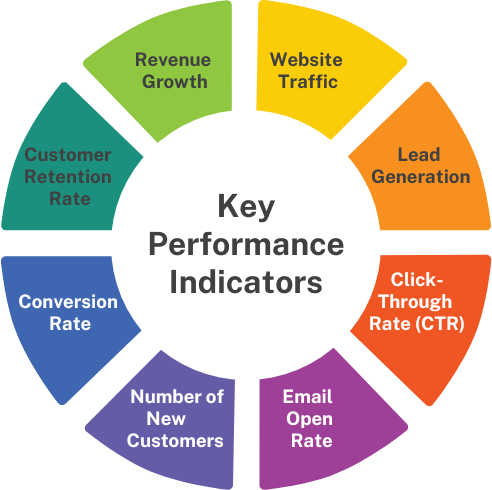
Using analytics tools is like having a magnifying glass to see things more clearly. These tools help businesses understand how their marketing is working by looking at lots of data. This way, they can see what is bringing in potential customers and what needs to change. When a business uses analytics tools, they can track important numbers, like how many people visit their website or how many people click on their ads. These numbers help businesses understand if they are reaching their target audience and growing their revenue streams.
Analytics tools are important for business expansion because they provide valuable insights. By looking at the data, businesses can make better decisions and improve their marketing strategy. This helps them reach more customer segments and increase their market share. Some of the essential analytics tools used are:
- Google Analytics
- SEMrush
- Moz
- HubSpot Analytics
- Adobe Analytics
- Kissmetrics
- Crazy Egg
- Hotjar
- Ahrefs
- Matomo (formerly Piwik)
At Pinnacle Technologies, we track important parameters to understand how many leads are coming in and how well they convert into customers. Using advanced analytical tools, we can see which marketing strategies are working and which need improvement. Contact us today to get started!
A/B Testing
A/B testing is like having two different versions of the same idea and seeing which one works better. It helps businesses find out what their target audience likes more. This is done by showing one group of people version A and another group version B, and then comparing the results.
When a business uses A/B testing, they might change something small, like the color of a button or the headline of an ad. They then see which version gets more clicks or sales from potential customers. This helps them understand what their target market prefers.
A/B testing is important for business expansion because it helps businesses make smart decisions based on real data. By finding out what works best, they can improve their marketing strategy, attract more customer segments, and increase their market share. This makes their marketing more effective and their business more successful.
Specific Strategies for Business Expansion
Using specific strategies is very important for business expansion because it helps businesses focus on the best ways to grow. This means they use their time and money wisely, reduce risks, and get the best results. When businesses know and use these strategies, they can handle the challenges of growing into new markets and getting bigger. Adding these specific strategies to your marketing strategy helps you find new customer segments and expand your market share. It makes sure that your business grows in the best way possible and reaches its goals for expansion. Here are some key strategies you can use:
Influencer Marketing
Businesses work with influencers, who are people with lots of followers on social media, to promote their product offerings. These influencers share posts, videos, or stories about the product, making their followers want to check it out.
When a business uses influencer marketing, it reaches a bigger target audience through the influencer’s followers. This can help find more potential customers who trust the influencer’s opinion. It’s like getting a recommendation from a friend, which can be very powerful.
Influencer marketing is important for business expansion because it helps businesses grow their market share and reach new customer segments. By working with the right influencers, businesses can increase their revenue streams and become more popular with the people who matter most.
Video Marketing
Video marketing is like making a fun commercial about your product that people can watch online. Businesses create videos to show their product offerings, explain how they work, or tell a story about their brand. These videos can be shared on social media, websites, and other places where the target audience spends time.
When a business uses video marketing, it helps people see and understand what the product is all about. Videos are interesting and easy to watch, so they can attract a lot of potential customers. For example, a company might make a video showing how to use a new gadget or share customer reviews in a fun way.
Video marketing is important for business expansion because it grabs attention and keeps people engaged. By creating great videos, businesses can reach new customer segments, increase their market share, and boost their revenue streams. Videos make it easier for customers to learn about and trust the business, leading to more sales and growth.
Real-Life Example of Success Through Video Marketing
Blendtec, a blender manufacturer, became famous due to its video marketing campaign called “Will It Blend?”. In these videos, the company blends various unusual items like iPhones, marbles, and even golf balls to show the power and durability of their blenders. The videos are fun and surprising, capturing the attention of a wide target audience.
By using video marketing, Blendtec demonstrated the effectiveness of their blenders in a memorable and entertaining way. This strategy helped the company grow and expand, showing how powerful video content can be for business expansion.
Mobile Marketing
It helps businesses reach their target audience on devices they use every day, like phones and tablets. This can include text messages, app notifications, and ads on mobile websites.
When a business uses mobile marketing, it can send special offers, updates, or reminders directly to potential customers. For example, a store might send a coupon to customers’ phones when they are nearby. This makes it easy for customers to stay connected with the business and take advantage of deals.
Mobile marketing is important for business expansion because almost everyone uses a mobile device. By reaching customers on their phones, businesses can increase their revenue streams and find new customer segments. It’s a powerful way to grow and improve their market share in a world where mobile devices are everywhere.
Real-Life Example of Success Through Mobile Marketing
Nike is a great example of a business that uses mobile marketing to grow. They developed a mobile app called Nike Training Club. This app provides workout plans, training tips, and tracks users’ progress. It also sends notifications about new products and special offers.
This mobile marketing strategy helps Nike reach their target audience directly on their phones. Users love the personalized workouts and the convenience of having a trainer in their pocket. The app also promotes Nike’s product offerings, encouraging users to buy Nike gear to enhance their workouts.
Retargeting
It helps businesses reach people who visited their website but didn’t buy anything. By showing them ads again, businesses can remind these potential customers about their product offerings. When a business uses retargeting, it places ads on other websites or social media platforms that the visitors use. This way, when the target audience sees these ads, they remember the product they looked at before. For example, if someone looked at shoes on a website but didn’t buy them, they might see ads for those shoes later while browsing the internet.
Retargeting is important for business expansion because it helps turn visitors into buyers. It increases the chances that potential customers will come back and make a purchase. This boosts revenue streams and helps businesses grow their market share by reaching people who are already interested in their products.
Most people who visit a website for the first time leave without buying — that’s normal buyer behavior, not a failure. Retargeting exists precisely to bring those warm, already-interested visitors back. Pairing retargeting with email follow-up gives you two chances to re-engage the same high-intent audience.
Marketing Automation
Marketing automation is like having a robot helper that does your marketing tasks for you. It helps businesses save time by automatically sending emails, posting on social media, and tracking customer behavior. This way, businesses can focus on other important things while the automation takes care of repetitive tasks.
When a business uses marketing automation, it can send personalized messages to its target audience without doing everything manually. For example, if a customer signs up for a newsletter, they might automatically receive a welcome email. If they leave items in their online shopping cart, they could get a reminder email to complete their purchase. This helps keep potential customers engaged and interested in the product offerings.
Marketing automation is important for business expansion because it helps businesses reach more customer segments and increase their revenue streams. By using automated tools, businesses can efficiently manage their marketing efforts, attract more potential customers, and grow their market share. This makes the whole marketing process smoother and more effective.
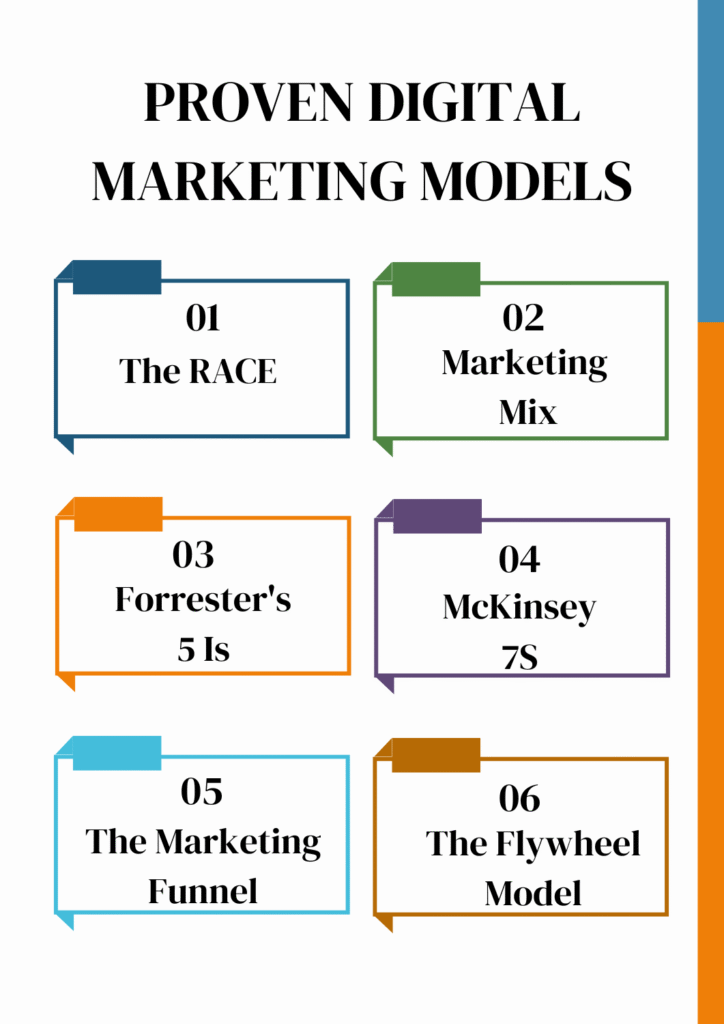
Overview of Proven Digital Marketing Models
1. The RACE Model
The RACE Model is a digital marketing strategy framework that helps businesses grow step-by-step. It stands for Reach, Act, Convert, and Engage.
- Reach: This is about getting your target audience to notice your brand. Businesses use SEO, content marketing, and email marketing to attract potential customers. This is important for small business marketing and following industry trends.
- Act: Here, the focus is on customer engagement. Businesses want people to visit their website, follow them on social media, and interact with their content. This helps in getting to know your audience better and setting up for sales growth.
- Convert: This is where visitors turn into actual customers. Businesses track performance metrics to see how many visitors are buying products. This helps in improving the marketing mix and the 4 Ps of marketing (Product, Price, Place, Promotion).
- Engage: Finally, businesses keep customers happy and coming back. This step is all about customer satisfaction and loyalty, making sure customers feel valued. Regular performance monitoring and continuous evaluation help businesses stay on track and adjust their strategies as needed.
The RACE Model helps businesses use proven marketing methods and tools, like market research and digital channels, to achieve their marketing goals and gain a competitive advantage.
2. Marketing Mix
The Marketing Mix is like a recipe for business success. It includes the 4 Ps of marketing: Product, Price, Place, and Promotion. Product is what you sell, Price is how much you charge, Place is where you sell it, and Promotion is how you tell people about it. By getting the right mix, businesses can attract their target audience, improve customer engagement, and boost sales growth.
3. Forrester’s 5 Is
Forrester’s 5 Is are Involvement, Interaction, Intimacy, Influence, and Individualization. These help businesses connect deeply with their target audience. Involvement means getting people interested, Interaction is engaging with them, Intimacy is building close relationships, Influence is encouraging them to talk about your product, and Individualization is personalizing the experience. This approach helps in improving customer satisfaction and achieving marketing goals.
4. McKinsey 7S
The McKinsey 7S model includes Strategy, Structure, Systems, Shared Values, Skills, Style, and Staff. These are the seven key areas businesses need to align for success. Strategy is the plan, Structure is how the company is organized, Systems are the processes, Shared Values are the culture, Skills are the abilities of the employees, Style is leadership behavior, and Staff is the workforce. Aligning these helps improve business strategy integration and resource optimization.
5. The Marketing Funnel
The Marketing Funnel shows how potential customers move from learning about a product to buying it. It includes stages like Awareness, Interest, Consideration, Intent, Evaluation, and Purchase. Each stage uses different tactics to guide customers closer to buying. This model helps in tracking performance metrics and ensuring sales growth.
6. The Flywheel Model
The Flywheel Model focuses on creating a cycle of happy customers who promote the business. It has three main parts: Attract, Engage, and Delight. Attract draws in potential customers, Engage builds strong relationships, and Delight ensures customer satisfaction, making them loyal promoters. This continuous cycle helps in achieving business expansion and maintaining customer satisfaction.
How to Make the Most Out of These Strategies
Leveraging digital marketing techniques like social media marketing, SEO, email marketing, and content marketing can significantly increase your reach and engagement with potential customers. However, we understand that things can get pretty complex. The digital marketing landscape is constantly evolving, with new tools, algorithms, and platforms emerging all the time. Managing these changes while trying to focus on your core business can be overwhelming.
Let the experts handle that! A strong digital marketing strategy is your key to business expansion. By integrating models like the RACE Model, Marketing Mix, Forrester’s 5 Is, McKinsey 7S, Marketing Funnel, and Flywheel Model, you can connect with your target audience, engage potential customers, and boost sales growth. These proven marketing methods ensure you stay ahead of industry trends and maximize your market share. With expert guidance, you can navigate the complexities of digital marketing and drive your business to new heights. If you’d rather bring in a partner to run the whole growth system for you, we can help. Ready to get started with our proven strategies? Call us at +1 (630) 895-9061 to reach new heights in business expansion.
Frequently Asked Questions
Which digital marketing channel should I start with first?
It depends on how quickly you need results and what you’re trying to accomplish. If you need traffic fast, Google Ads (PPC) can put you in front of high-intent searchers the same day you launch. If you’re building for the long term, SEO and content marketing compound over time and lower your reliance on paid clicks. Many businesses run a paid channel for immediate leads while building organic channels in the background. Start with the one goal you defined for your strategy and pick the channel that maps to it.
How long does it take to see results from digital marketing?
It varies by channel. Paid channels like Google Ads and email to an existing list can produce results within days. Social media typically takes a few weeks to a few months of consistent posting to build momentum. SEO and content marketing are the slowest to pay off — usually several months — but they tend to deliver the most durable, compounding value. The key is to combine fast and slow channels so you’re generating leads now while building assets that keep working later.
Do I need to use every channel and framework in this guide?
No. Trying to do everything at once usually spreads your budget and attention too thin. Start with two or three channels that fit your audience and goals, measure what works, and expand from there. The frameworks — RACE, the Marketing Mix, the Flywheel, and the others — are lenses to help you organize your thinking, not a checklist to complete. Pick the model that matches how your customers actually move from awareness to purchase.
What KPIs matter most for measuring digital marketing success?
The right KPIs depend on your goal, but common ones include website traffic, lead volume, conversion rate (how many visitors take the action you want), cost per lead, and repeat-purchase or retention rate. Tie each KPI back to a business outcome rather than tracking numbers for their own sake. Analytics tools help you see which channels drive those outcomes so you can double down on what works and cut what doesn’t.
Should I manage digital marketing in-house or hire an agency?
Both can work. In-house gives you the most direct control and works well if you have the time and skills on your team. An agency brings specialized expertise, established tools, and the ability to move faster across multiple channels — which matters as the digital landscape keeps changing. Many growing businesses start in-house and bring in a partner once marketing becomes too complex to manage alongside their core operations. Pinnacle Technologies offers custom packages starting at $3,997/month, and you can contact us to talk through what fits your goals.
